

Connect Claude Desktop, Cursor, and custom AI agents to Postcodewise via the Model Context Protocol.
The way developers and analysts interact with data is fundamentally changing. Instead of manually writing API queries and parsing JSON responses in custom scripts, users are increasingly utilizing autonomous AI agents—such as Anthropic Claude Desktop, Cursor IDE, and custom Python agents—to conduct complex research workflows.
However, AI agents are only as good as the context they have access to. When evaluating UK locations, general-purpose LLMs frequently hallucinate demographic figures, invent non-existent school ratings, or quote outdated crime numbers.
In Postcodewise v2.28, we launched the Official Postcodewise Model Context Protocol (MCP) Server—bringing verified, open-government UK location intelligence directly into your AI assistant's reasoning loop.
What is the Model Context Protocol (MCP)?
The Model Context Protocol is an open standard developed by Anthropic that enables LLM applications to securely interact with external tools, databases, and context servers. Rather than building custom API wrappers for every LLM provider, MCP provides a unified protocol for tool execution and context retrieval.
With the Postcodewise MCP server, any MCP-compatible client can invoke our location tools as native capabilities during conversation.
Core MCP Tools Available
The Postcodewise MCP server exposes three powerful tools:
1. get_postcode_report
Retrieves a complete location intelligence dossier for any valid UK postcode:
- Demographic distribution (population, age groups, household tenure, IMD decile).
- School catchment metrics (nearest primary and secondary schools with Ofsted ratings).
- Crime breakdown (monthly violent crime, burglary, anti-social behaviour series).
- Environmental and geotechnical risks (BGS ground stability, Defra noise contours).
- Transport connectivity and station distances.
2. compare_areas
Performs an automated, structured comparative analysis between two postcodes or postal districts (e.g. SW19 4RF vs TW9 1DN):
- Delta calculations on median house prices and rental yields.
- Direct safety score comparison.
- School density and Ofsted excellence ratios.
3. find_areas
A parameterized discovery tool that allows agents to find postcodes matching strict criteria:
- Budget constraints (maximum median price or rental threshold).
- Minimum school rating requirements.
- Maximum crime thresholds.
60-Second Setup with Claude Desktop
Connecting Postcodewise to Claude Desktop takes less than a minute. Simply add the following configuration to your claude_desktop_config.json:
{
  "mcpServers": {
    "postcodewise": {
      "command": "npx",
      "args": [
        "-y",
        "@digitsflow/postcodewise-mcp"
      ],
      "env": {
        "POSTCODEWISE_API_KEY": "YOUR_WORKSPACE_API_KEY"
      }
    }
  }
}
Restart Claude Desktop, and you will see the Postcodewise tools appear in your prompt tray. You can now prompt Claude:
"Claude, analyze 5 potential buy-to-let postcodes in Birmingham. Compare their gross rental yields, tenant demographics, and nearest train stations, and format the recommendation in an investment memo."
Claude will automatically invoke get_postcode_report and compare_areas, pulling real-time verified data to write an accurate, hallucination-free report.
Developer Pricing & Workspace Keys
The MCP server uses standard workspace-scoped API keys (POSTCODEWISE_API_KEY).
- Free Tier: 50 monthly lookups included with any verified workspace account.
- Pro Developer: 5,000 monthly lookups at £29/month with origin allow-listing and sub-10ms response SLAs.
To generate your API key, log in to your Postcodewise dashboard and navigate to Settings → API Keys.
Postcodewise Product & Engineering
OfficialPostcodewise is operated by Digitsflow LTD, delivering verified open-government location intelligence, demographic insights, and spatial analytics across the United Kingdom.
Keep exploring
Recent Releases & Articles
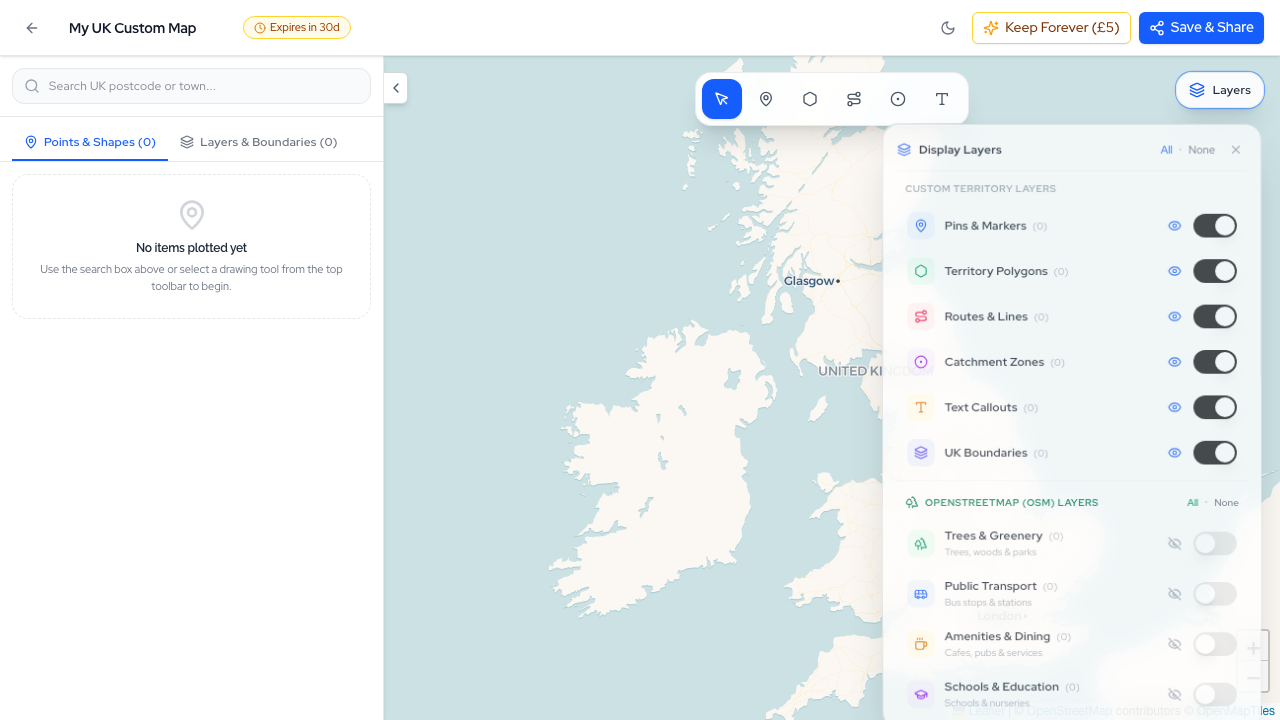
The Postcodewise Summer 2026 Mega Product Update: 35+ Releases, Map Studio, NaPTAN Transit, Conversational AI, and Sub-10ms Search
Over the last two months, the Postcodewise platform has undergone its most expansive transformation to date. Spanning more than 35 rapid releases (v2.13 through v2.49), we have introduced Map Studio, full official NaPTAN transit integration, Conversational Location Intelligence, sub-10ms Typesense search, Defra noise contours, BGS ground hazards, and our official Model Context Protocol (MCP) server. Here is an exhaustive breakdown of everything we have built.
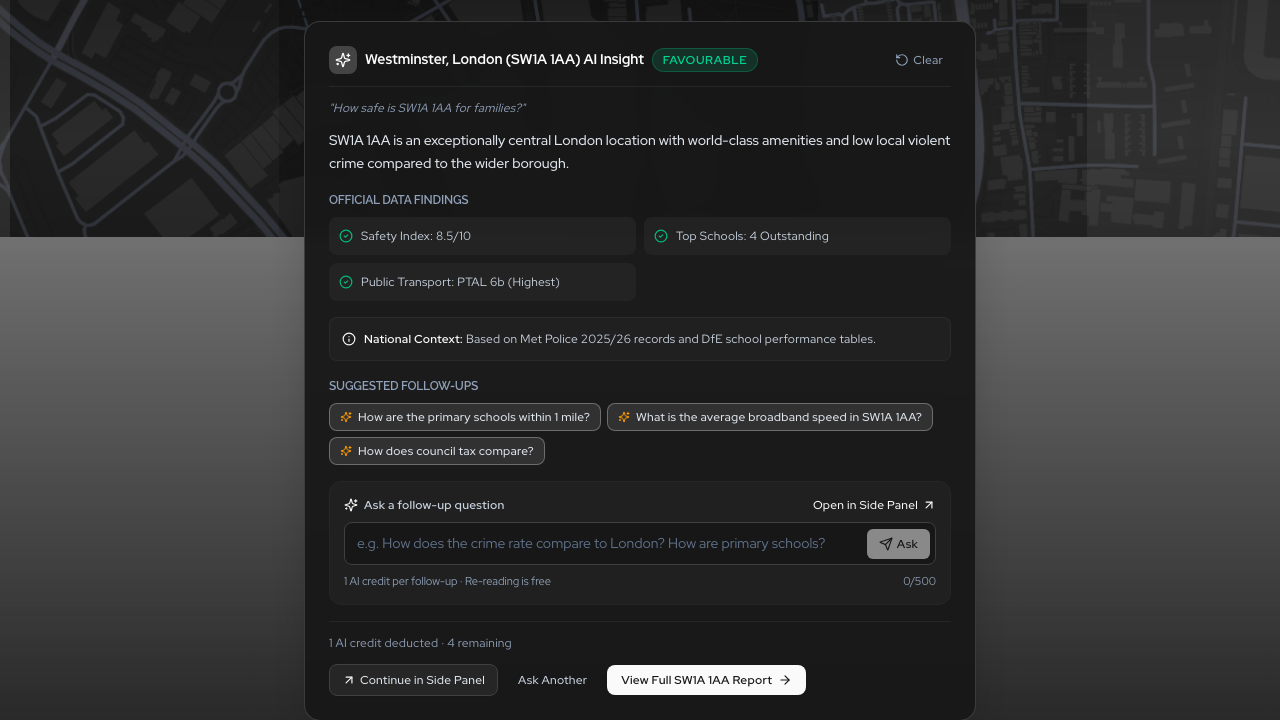
Conversational Location Intelligence: Ask Any UK Postcode Question in Natural Language
Say goodbye to digging through dozens of disjointed data tables. With Postcodewise Conversational AI, you can ask complex questions about UK postcodes in plain English—from family suitability and school catchments to rental yield comparisons—and receive instant, verified answers grounded in official open government data.
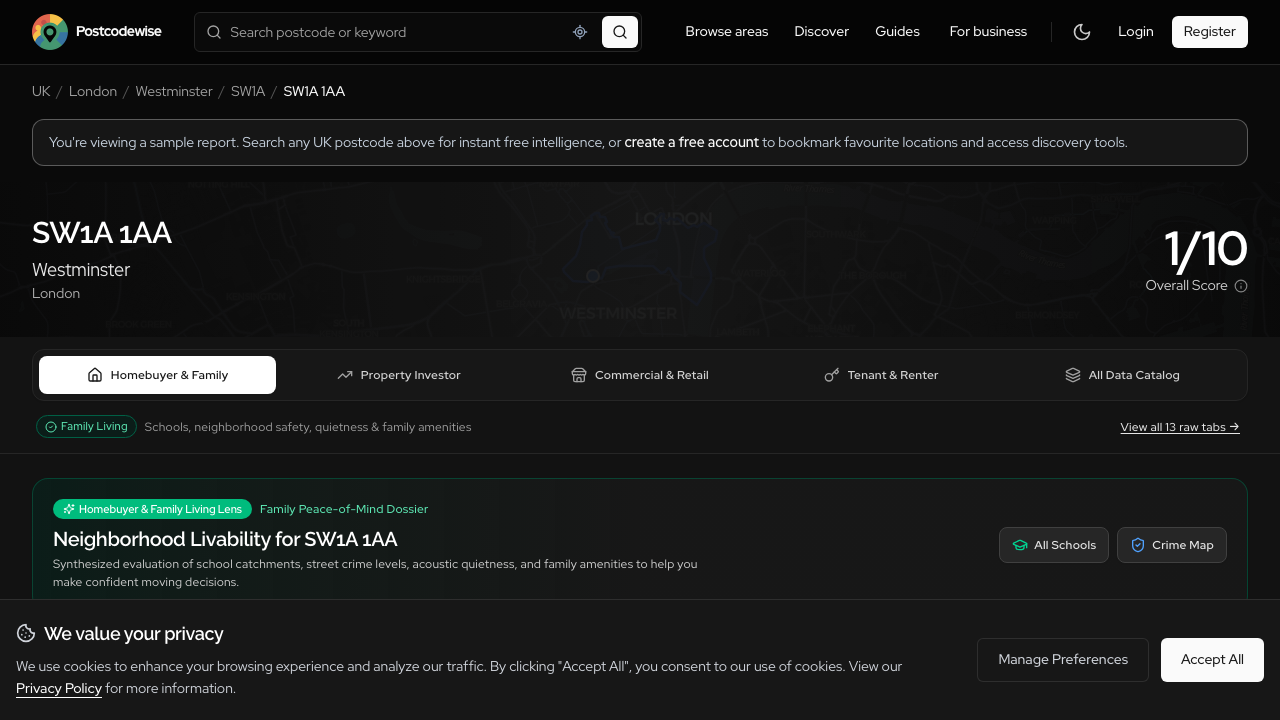
Introducing Audience Lenses: Tailored Location Intelligence for Buyers, Investors, Businesses, and Surveyors
A family evaluating schools needs completely different insights than a buy-to-let investor assessing gross yields or a surveyor checking subsidence hazards. Introducing Audience Lenses: four purpose-built analytical perspectives available across Postcodes, Districts, Wards, Comparisons, and Guides.
Experience these features on your own postcode
Search any UK postcode to explore conversational location AI, school catchments, crime trends, planning applications, and ground hazards.